Personalized genetic therapies for children with the rarest diseases
Rare Break brings leading scientists together and funds the research. What we learn from each therapy makes the next one faster. We started with our daughter, Jojo.
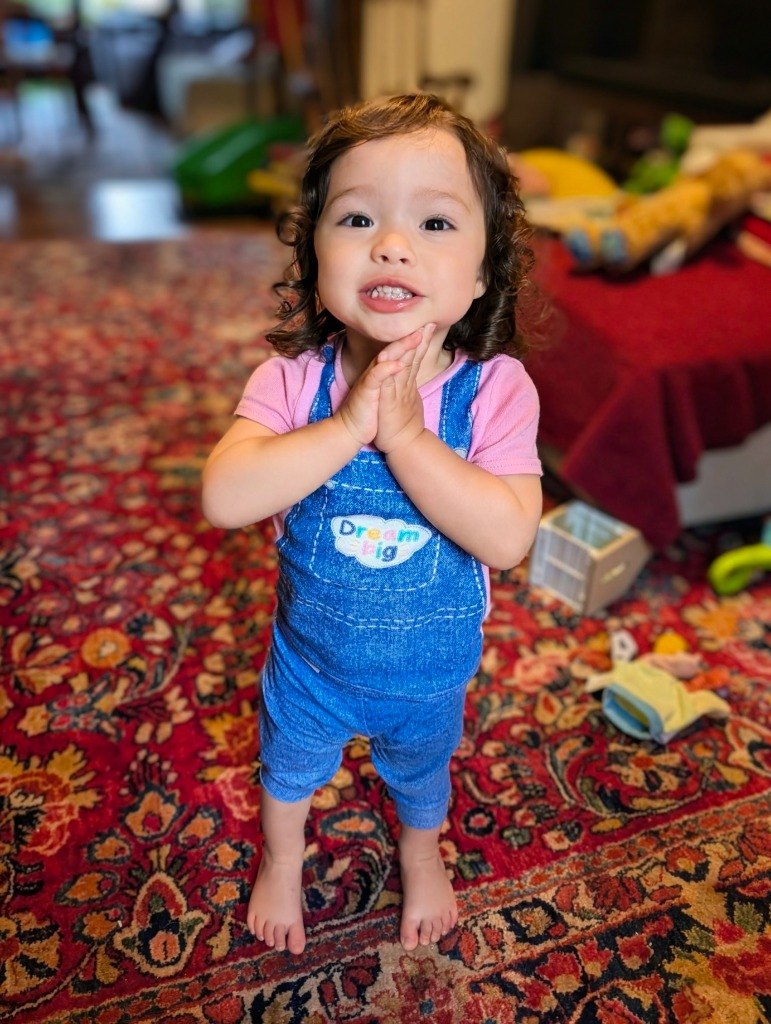
Meet Jojo
Anyone who meets Jojo says she's magnetic.
When she locks eyes with a stranger, her face lights up, her eyes glimmer, like she's just won a big prize, and the prize is time with you.
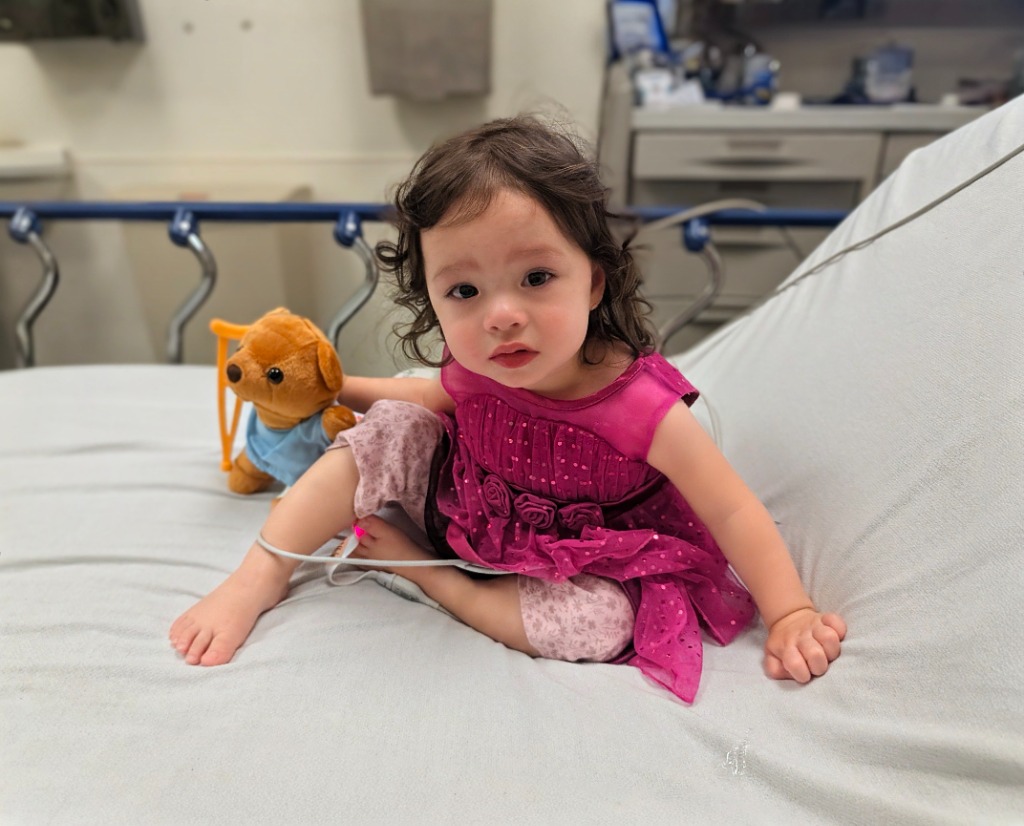
She was also born with SCN8A, a severe genetic epilepsy. When she has a seizure, she stops breathing, and we pray she'll breathe again. Not every child with SCN8A does. There is no cure.
Hope for Jojo, our first project, is developing a therapy for her exact mutation and a path other families can follow.
The problem
Too rare for drug companies
Most of the more than 7,000 known rare diseases have no approved treatment. For the rarest ones, the usual path to a therapy doesn't exist.
Too few patients
When a mutation is shared by only a handful of children, drug companies can't justify the cost of developing a therapy.
No playbook
Families start from zero, raising money and recruiting scientists on their own.
Lessons get lost
What one family learns rarely reaches the next, so each one has to start over.
Our approach
How it works
Our goal is to speed up n-of-1 therapies: treatments designed for one child's specific mutation. We focus on genetic therapies, which go after the cause of a disease, not just its symptoms.
CRISPR gene editing fixes a genetic typo directly in the DNA. Antisense oligonucleotides (ASOs) turn a gene's activity up or down without changing the DNA.
- 01
Design
A genetic therapy for the child's mutation.
- 02
Test in human cells
Grown from the child's own stem cells.
- 03
Test in mice
Engineered to carry the same mutation.
- 04
Manufacture and test safety
To FDA standards.
- 05
Treat
Once the FDA clears it.
Each therapy makes the next one faster
The main thing that changes from one child to the next is the therapy's design, such as the gene editor or ASO. The rest of the process stays largely the same, so each therapy that works becomes a playbook for the next.
The FDA is increasingly supportive. In 2026, it released draft guidance on individualized therapies and on reusing data across similar gene-editing programs.
We're starting with the nervous system, the next frontier for gene editing.
AI at every step
- GeminiPointed to Jojo's diagnosis before any doctor suspected it, and its deep research built the scientific case for this work.
- AlphaFoldLet us see Jojo's mutation.
- Co-ScientistHelps generate hypotheses.
- IGIUses AI to make Jojo's gene editor more effective.
- Jackson LabUses AI to test hypotheses and design studies.
- FamiliesWe're exploring AI models built on what families share day to day.
Our long-term goal is a predictive AI model, built on shared data from each therapy, so new therapies can be designed faster.
Hope for Jojo
Progress so far
Leading scientists are working on an 18 to 24 month plan to develop Jojo's therapy.
raised toward our $5M goal for Jojo's therapy
Includes cash, grants, and committed in-kind support. As of August 23, 2026.neurology cases at the Innovative Genomics Institute. Jojo's paved the way.
-
Gene editor builtIGI designed an editor to correct Jojo's mutation and is using AI to make it more effective.
-
Testing in human neuronsThe editor is being tested on neurons grown from stem cells.
-
Mouse model createdJackson Laboratory made a mouse with Jojo's exact mutation and is studying it.
-
Manufacturing prep fundedThe manufacturing contract is underway.
-
Next up: the first production batchWe're raising $500,000 to set it up.
Get involved